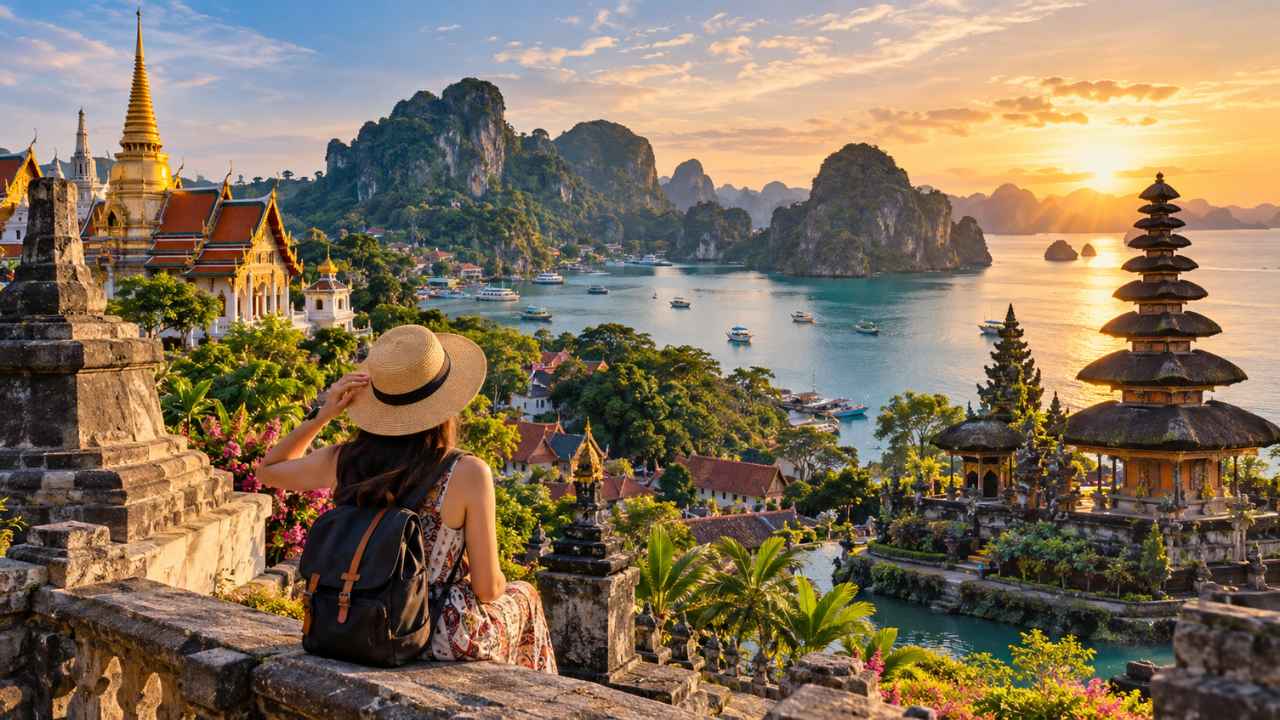
Southeast Asia is one of the world’s most popular travel regions and the closest neighbour for travellers based in Indonesia. Sitting between the great civilisations of China and India, the region is a kaleidoscope of culture, history and natural beauty: home to more than 675 million people—nearly 8.5% of the world’s population—where ancient traditions coexist with modern skylines.
This page is the parent hub for the Southeast Asia region: from the mainland/maritime split, history, climate, culture and etiquette, food, and the best beaches and islands, to the best time to visit and tips for planning your trip. The region spans eleven sovereign states, each adding a unique thread to the tapestry once known as the East Indies.
Whether you are looking for sacred temples, tropical islands, cosmopolitan cities or untouched rainforest, travelling Southeast Asia offers a depth of experience few other regions in the world can match.
Southeast Asia at a Glance
| Category | Details |
|---|---|
| Countries | 11 sovereign states: Indonesia, Thailand, Vietnam, Malaysia, Singapore, the Philippines, Myanmar, Cambodia, Laos, Brunei and Timor-Leste |
| Population | About 675 million (roughly 8.5% of the world’s people) |
| Organisation | United in ASEAN (Association of Southeast Asian Nations) |
| Divisions | Mainland Southeast Asia (Indochina) & Maritime Southeast Asia (Malay Archipelago) |
| Climate | Tropical monsoon; warm year-round with a wet and a dry season |
| Currencies | Many: rupiah, baht, dong, ringgit, Singapore dollar, peso, kyat and more |
| Time zones | Mostly UTC+6:30 to UTC+9 |
| Languages | Hundreds of languages; English is the broadest travel lingua franca |
| Hub airports | Singapore (SIN), Bangkok (BKK) & Don Mueang (DMK), Kuala Lumpur (KUL), Jakarta (CGK), Hanoi/Ho Chi Minh City (HAN/SGN) |
| Best time | Generally the dry season around November–April for beaches and islands |
Mainland vs. Maritime: The Two Faces of Southeast Asia
Geographically the region splits into two subregions with quite different travel characters:
Mainland Southeast Asia (Indochinese Peninsula)
- Cambodia
- Laos
- Myanmar
- Thailand
- Vietnam
- Peninsular Malaysia
Maritime Southeast Asia (Malay Archipelago)
- Brunei
- East Malaysia
- Indonesia
- The Philippines
- Singapore
- Timor-Leste
Peninsular Malaysia is the interesting case—physically part of the mainland but culturally and historically tied to the maritime world. It bridges continents and cultures, blending influences from both subregions.
A Tapestry of History
Prehistoric Foundations
The landmass once known as Sundaland connected the mainland to many islands. The caves of Sulawesi and Borneo hold figurative paintings over 40,000 years old—among the oldest known on Earth. The megalithic site of Gunung Padang is further evidence of the region’s long record of civilisation.
Hindu and Buddhist Kingdoms
A process of Indianisation from around 400 BCE brought Sanskrit and Pali influence to royal courts. This era produced masterpieces such as Angkor Wat and maritime powers like Srivijaya and Majapahit.
The Islamic Influence
From the 11th century, Islam spread along the spice trade routes. The Malacca Sultanate became a centre of commerce and faith that reshaped the Malay Peninsula and much of the archipelago.
Colonial Era and Modern Autonomy
From the 16th century, European powers competed for control. Notably, Thailand was the only nation never colonised. After World War II the region went through rapid decolonisation and today balances regional economic integration with national identity and sovereignty.
Climate and Environment: What Travellers Should Expect
Tropical Monsoon Climate
Most of the region is warm year-round, with a wet season and a dry season. When the rains arrive the landscape turns lush green—ideal for photography and cultural exploration. The dry season brings calmer seas, clearer visibility and more open skies for beach and diving trips.
Regional Nuances
- Northern Vietnam has a subtropical winter that can feel genuinely cold.
- The dry zone near Bagan stays semi-arid.
- Highland areas across Indonesia, Malaysia and Vietnam offer cooler temperatures.
Ring of Fire and Biodiversity
Indonesia and the Philippines sit on the Pacific Ring of Fire, creating dramatic landscapes such as Mount Mayon. Diving in the Coral Triangle delivers world-class underwater experiences, while crossing the Wallace Line reveals dramatic shifts in wildlife. The region is also home to orangutans, Sumatran tigers and thousands of other endemic species threatened by deforestation.
Culture, Religion and Social Etiquette
The Religious Landscape
- Islam dominates Indonesia, Malaysia and Brunei.
- Buddhism shapes Thailand, Myanmar, Cambodia and Laos.
- Christianity thrives in the Philippines and Timor-Leste.
- Hinduism flourishes in Bali, with many grand temples by the sea and lakes.
Places of worship are not mere attractions but living spiritual centres. Dress modestly, remove your shoes when asked, and avoid disturbing worshippers.
Artistic Heritage
Experience Wayang Kulit shadow puppetry telling tales from the Ramayana, and the resonant sounds of Gamelan and Angklung—art forms closely tied to ritual and community. Traditional dance, weaving and crafts are also a window into local ways of life.
Social Etiquette
- Use your right hand for eating and for giving or receiving things in many cultures.
- Remove your shoes in sacred places and private homes.
- Respect hierarchy and elders—these values remain central across the region.
- A soft tone and a smile go a long way almost everywhere.
Southeast Asian Food You Must Try
Food is a main reason people travel to the region. Nasi goreng and rendang from Indonesia, tom yum and pad thai from Thailand, pho and banh mi from Vietnam, laksa and nasi lemak from Malaysia, plus Hokkien and Peranakan dishes from Singapore, create an almost endless landscape of flavour.
Street food and traditional markets are well worth trying to taste how locals really eat and to find flavours rarely seen on international menus. Pick busy stalls, mind the hygiene, and dial the spiciness to your own taste.
The Best Beaches and Islands in Southeast Asia
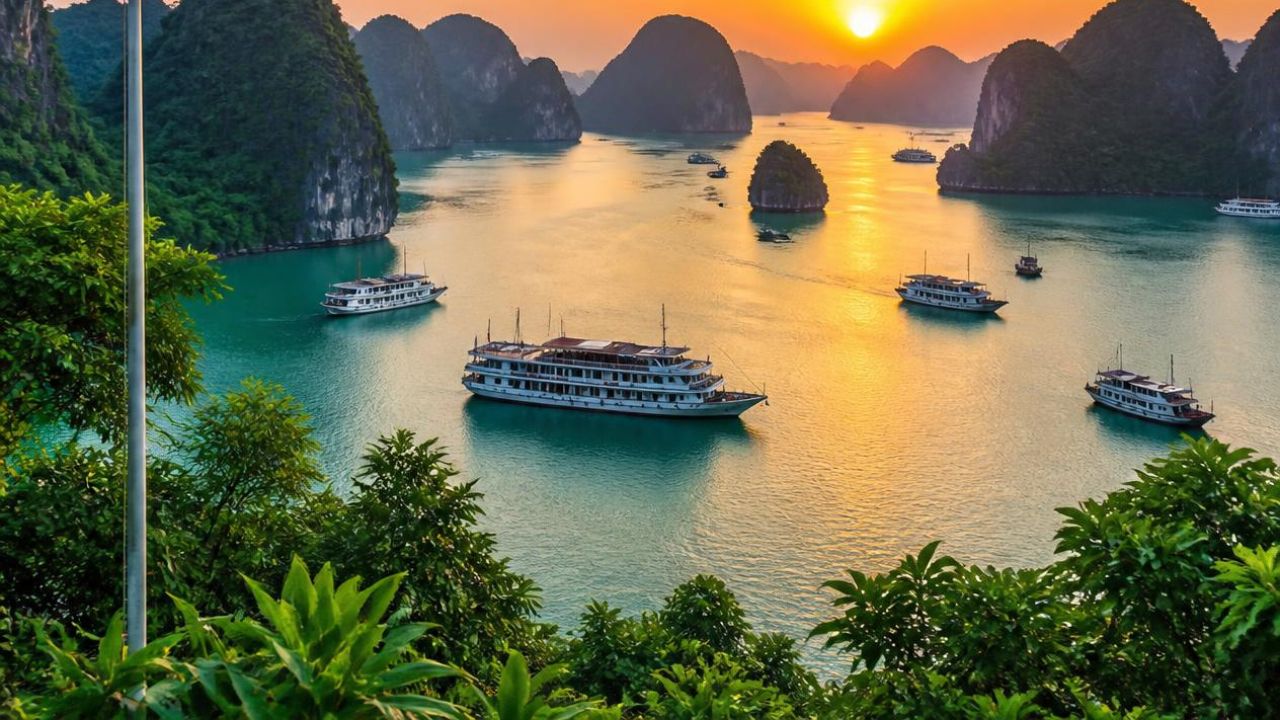
The region has some of the most famous beaches and islands in the world. Bali and Lombok in Indonesia, Phuket and Krabi in Thailand, El Nido and Boracay in the Philippines, Langkawi in Malaysia, and the Halong Bay islands of Vietnam are the names that most often make bucket lists.
Swimming, diving, snorkelling, surfing, sailing and simply relaxing are all on offer. Beyond the famous spots, quieter islands and small coastal villages offer a calmer, more authentic experience.
Southeast Asian Cities Worth Exploring
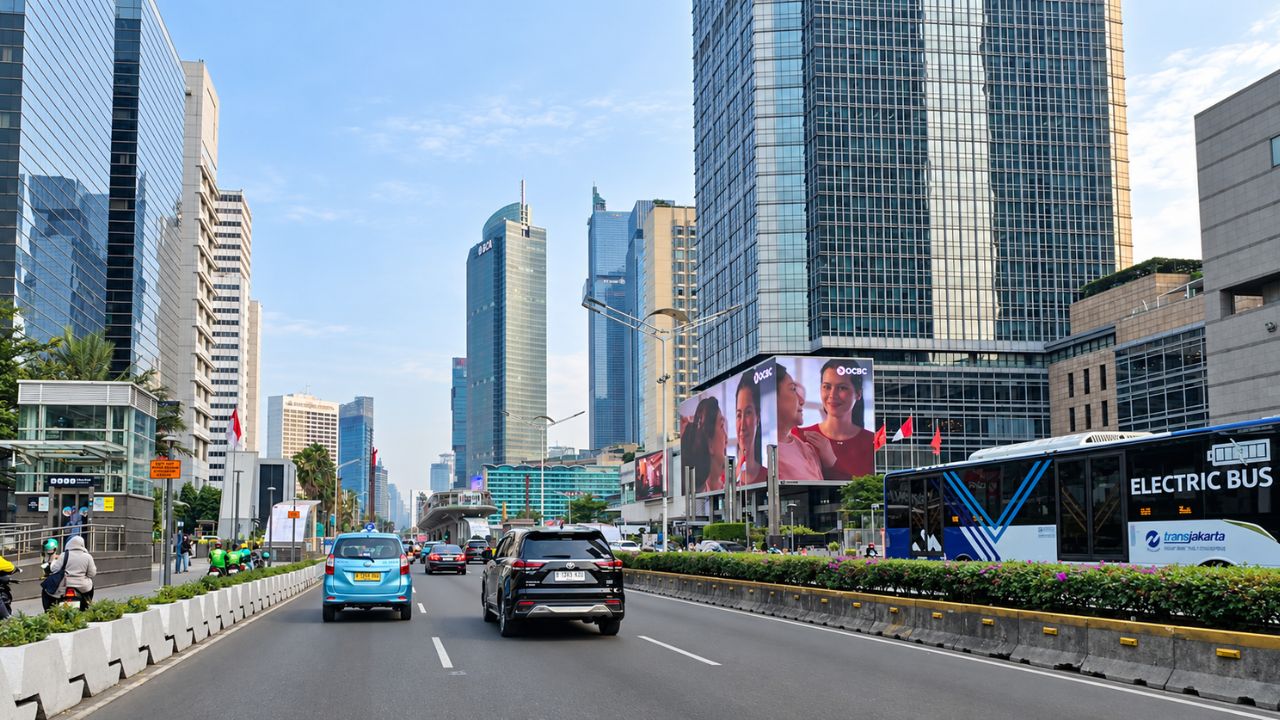
The big cities are destinations in their own right. Jakarta, Bangkok, Singapore, Kuala Lumpur, Hanoi, Ho Chi Minh City, Manila and Phnom Penh each blend food, architecture, shopping, entertainment, history and local culture in their own way.
Efficient public transport—Singapore’s MRT, Bangkok’s BTS, Jakarta’s commuter line—makes these cities easy to navigate. Make time for old quarters, traditional markets, neighbourhood cafés and street-food stalls between visits to the headline landmarks.
The Traveller’s Economy: Budget to Luxury
Southeast Asia offers one of the widest ranges of travel costs anywhere. Indonesia is the region’s largest economy and a G-20 member, while Singapore leads on GDP per capita and urban efficiency.
From budget-friendly Hanoi streets to luxury Singapore hotels, travellers can tailor a trip to almost any budget, whether backpacking or staying in five-star resorts.
Responsible Travel and Heritage Preservation
Southeast Asia’s rainforests are a global biodiversity stronghold, and the region hosts the Coral Triangle—the global epicentre of marine biodiversity. Species such as the orangutan and the Sumatran tiger face threats from deforestation.
As a traveller you can help preserve the region by:
- Supporting eco-friendly accommodation.
- Respecting wildlife and marine ecosystems; avoiding attractions that exploit animals.
- Engaging with local communities ethically.
- Choosing cultural experiences that sustain traditions.
When Is the Best Time to Visit Southeast Asia?
Because of the tropical monsoon climate, the best time differs between countries—and even between areas within one country. In general:
- November–April — the dry season; most comfortable for beaches, islands and diving across much of the region.
- May–October — the wet season in many places, but with cheaper accommodation and greener landscapes.
- Watch local monsoons — the east and west coasts of Peninsular Malaysia can follow different rain patterns.
Always check the forecast, the festival calendar and local holiday seasons before booking tickets.
Transport and Planning a Trip
Southeast Asia is well connected by air. Hub airports such as Singapore (SIN), Bangkok (BKK/DMK), Kuala Lumpur (KUL) and Jakarta (CGK) make it easy to connect between cities, helped by a dense network of low-cost carriers. For shorter hops, buses, trains and ferries are often cheap and efficient.
When planning, it helps to:
- Pick one or two countries per trip so you don’t spend all your time in transit.
- Match the seasons, not just the holiday calendar.
- Sort out visas and documents well in advance (e.g. six months of passport validity, onward tickets).
- Leave buffer time between destinations and avoid overpacking the schedule.
- Plan your payments: carry some local cash plus cards/e-wallets that are accepted.
Practical Tips and Etiquette in Southeast Asia
- Respect places of worship. Dress modestly, remove your shoes when asked, and follow local rules.
- Mind local customs, such as using the right hand for eating and how things are given and received.
- Keep the environment clean. Cut single-use plastic and support eco-friendly accommodation.
- Carry some cash for stalls, markets and public transport that don’t take digital payments.
- Haggle politely in traditional markets, and value the work of local artisans.
- Buy travel insurance and save emergency numbers and embassy contacts.
Start Here
This hub will keep growing with destination guides across Southeast Asia. Until the next article is published, start with these topics:
- Country hubs: Indonesia and Vietnam are available in English.
- Parent regional hub at Asia for the full continental overview.
- Practical travel tips in Travel Essentials—from plug types to cross-border payments.
Southeast Asia is too large to explore all at once. Choose one country, match it to its best season, and build your trip step by step—rather than waiting to fit everything into a single perfect holiday.