For foreign visitors travelling around Indonesia, paying for food, coffee, transport, shopping, and even small street purchases is becoming increasingly cashless. One payment method you will see almost everywhere is QRIS.
QRIS, pronounced roughly as “KRIS”, stands for Quick Response Code Indonesian Standard. It is Indonesia’s standardised QR-code payment system, allowing participating merchants to accept digital payments through a single QR code.
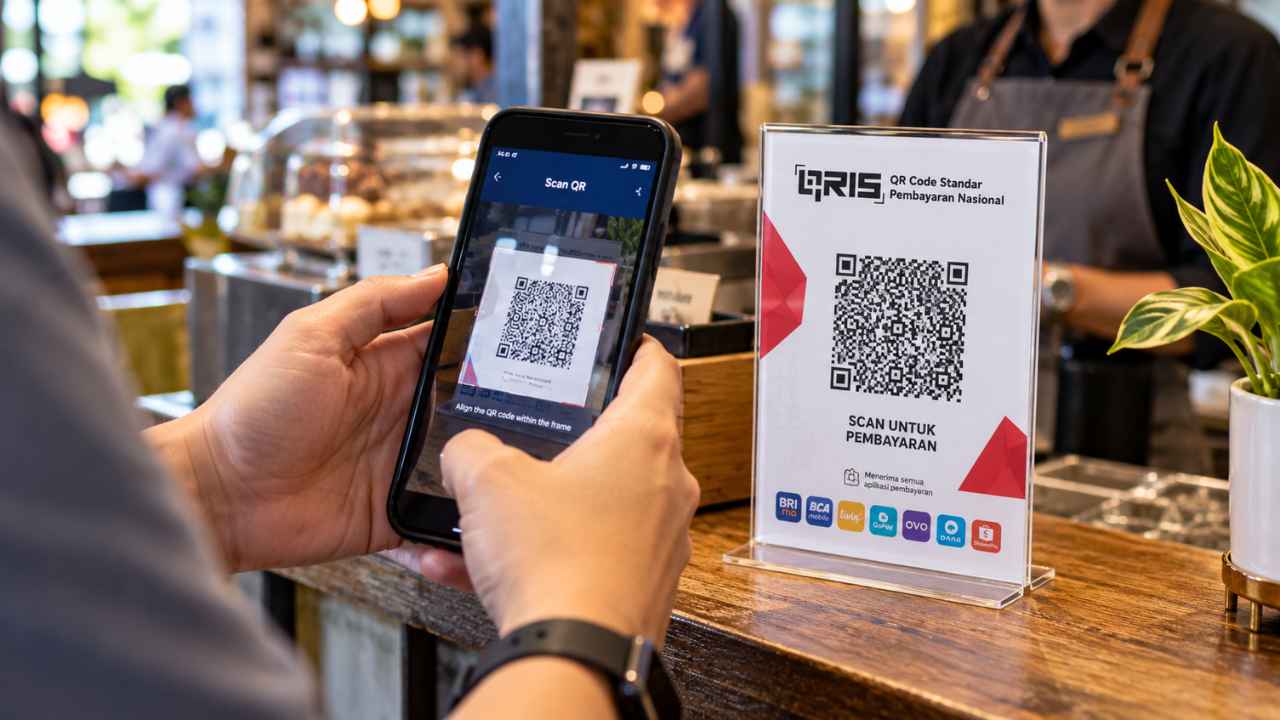
From shopping malls and restaurants to traditional markets and small roadside stalls, the familiar QRIS logo has become a common sight across Indonesia.
What Is QRIS?
QRIS was introduced as a national standard for QR-code payments in Indonesia. Instead of merchants displaying different QR codes for different payment providers, they can display one standardised QRIS code.
For local users, paying is usually straightforward: open a supported banking or e-wallet app, scan the QRIS code, enter the amount if necessary, confirm the transaction, and the payment is completed.
For foreigners, however, there is one important distinction.
Seeing a QRIS code does not automatically mean that every foreign banking or payment app can scan and pay it.
International visitors need a compatible payment service that supports cross-border QR payments with Indonesia.
Can Foreign Tourists Use QRIS?
Yes, in some cases.
Foreign tourists may be able to pay at Indonesian QRIS merchants using supported banking or payment applications from participating countries.
Indonesia has been expanding cross-border QR payment connectivity, allowing compatible payment systems in other countries to interact with Indonesia’s QRIS network.
Availability depends on your country, your bank, your payment provider, and whether the particular app supports QR payments in Indonesia.
This means tourists generally do not simply download QRIS itself. QRIS is a payment standard rather than a universal consumer wallet.
Instead, you normally use a compatible banking or payment app.
How to Pay with QRIS as a Foreigner
If your banking or payment app supports QRIS payments in Indonesia, the process is generally simple:
- Open your supported banking or payment app.
- Select its QR payment or scan function.
- Scan the merchant’s QRIS code.
- Check the merchant information displayed by your app.
- Enter the purchase amount if it has not already been provided.
- Review the amount and the applicable exchange rate or fees.
- Confirm the transaction.
- Wait for confirmation before leaving the merchant.
Always verify the merchant name and payment amount before confirming.
For dynamically generated QR codes, the purchase amount may already be embedded in the code. With static QRIS codes, you may need to type the amount yourself.
Where Can You Find QRIS?
QRIS has become widely used throughout Indonesia, particularly in major cities and tourist destinations.
Visitors may encounter QRIS at restaurants, cafes, convenience stores, supermarkets, shopping malls, hotels, attractions, parking facilities, traditional markets, souvenir shops, and small independent businesses.
One of the most interesting aspects for international travellers is how far QR payments have spread beyond large retailers.
A small warung, coffee stall, street-food vendor, or neighbourhood shop may display a QRIS code even when international credit cards are not accepted.
QRIS vs Credit Cards for Tourists
International Visa and Mastercard cards remain useful in Indonesia, especially at hotels, malls, larger restaurants, and established tourist businesses.
QRIS can complement cards because it is frequently available at smaller merchants where card terminals may not be present.
However, foreign travellers should not rely exclusively on QRIS.
Cross-border compatibility varies between countries and financial institutions, and a QRIS payment that works with one foreign banking app may not work with another.
Keeping some Indonesian rupiah (IDR) available is therefore still useful, particularly when travelling outside major urban or tourist areas.
Do You Need an Indonesian Bank Account?
Not necessarily.
If your home country’s supported bank or payment provider offers compatible cross-border QR payments in Indonesia, you may be able to scan participating QRIS codes directly through that app without opening an Indonesian bank account.
This is one of the major advantages of cross-border QR payment interoperability for travellers.
However, foreigners staying in Indonesia for longer periods may have additional local banking or e-wallet options depending on the provider’s registration and identification requirements.
What Currency Will You Pay In?
Indonesian merchants normally price transactions in Indonesian rupiah (IDR).
When using a supported foreign payment application, currency conversion may be handled by the participating financial institutions or payment network.
Before confirming a transaction, check the amount displayed in your app, the exchange rate when available, and any fees that may apply.
For larger purchases, comparing the final cost with your international credit or debit card can be worthwhile.
Look for the QRIS Logo
When shopping in Indonesia, look for the QRIS logo near the cashier or payment counter.
The QR code may be printed on a small tabletop display, a sticker, a receipt, a payment terminal, or the merchant’s phone screen.
If you are unsure whether your foreign app will work, you can simply ask:
“Can I pay with QRIS?”
Or, if you want to make it clear that you are using an overseas app:
“Can I use foreign QR payment here?”
The merchant may know whether international QR payments are commonly accepted, although actual compatibility ultimately depends on your payment provider.
A Useful Payment Option for Travelling in Indonesia
Indonesia’s rapid adoption of QR payments has made QRIS an increasingly important part of everyday transactions.
For foreign travellers with a compatible banking or payment app, it can provide a convenient way to pay without constantly carrying large amounts of cash or depending on merchants having an international card terminal.
Still, the best approach when travelling around Indonesia is to have multiple payment options available: a compatible QR payment app, an international debit or credit card, and some Indonesian rupiah in cash.
As Indonesia continues expanding cross-border QR payment connections, QRIS is likely to become increasingly useful for international visitors exploring the country.
Note: Cross-border QRIS availability, participating countries, supported banks, transaction limits, exchange rates, and fees can change. Travellers should check with their bank or payment provider before relying on QRIS during a trip to Indonesia.