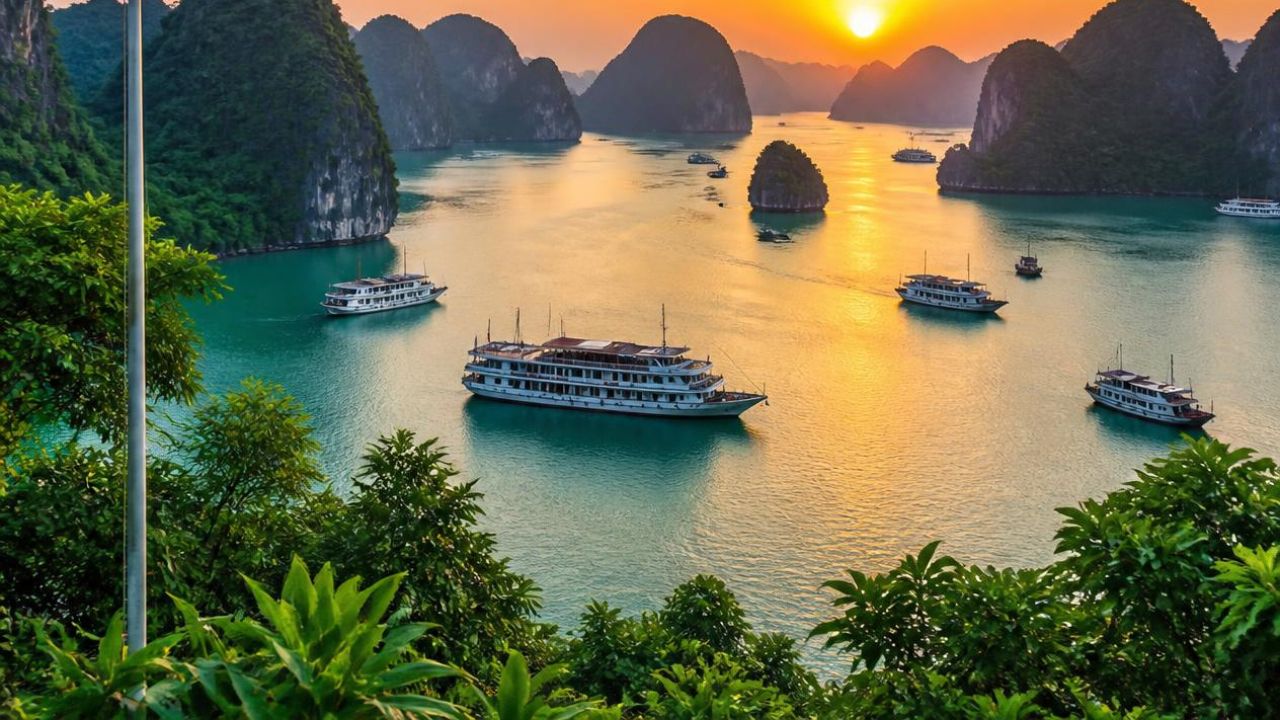
Welcome to Vietnam, the S-shaped country that stretches more than 1,600 kilometres from misty mountains in the north to river deltas and tropical islands in the south. In a single trip you can wander the centuries-old Old Quarter of Hanoi, sail a junk boat between the karst islands of Halong Bay, stroll beneath the lanterns of Hoi An, and finish the day with a bowl of pho at a street stall in Ho Chi Minh City.
This page is the parent hub for every route guide, city review, food recommendation and travel tip for Vietnam: from visa and currency information and intercity transport to the best time to visit, and the local etiquette you should understand before you set off.
Quick Facts and Important Information
| Category | Details |
|---|---|
| Capital | Hanoi |
| Official language | Vietnamese (English is widely understood in tourist cities and hotels) |
| Currency | Vietnamese dong (VND / ₫) — the value is small, so prices are often written in thousands |
| Time zone | ICT (UTC+7) — the same as Jakarta, so there is no jet lag when coming from Indonesia |
| Climate | Tropical monsoon with three different patterns: four seasons in the north (cold from December to February), a dry centre from February to August, and a hot south all year round |
| Power plugs | Types A, C & F (220 V, 50 Hz) — an adapter is often needed for type G plugs |
| Main gateways | Noi Bai (HAN) in Hanoi, Tan Son Nhat (SGN) in Ho Chi Minh City, Da Nang (DAD) and Cam Ranh (CXR) |
| Visa | Short-stay visa-free entry for Indonesian citizens (generally 30 days, as Indonesia is an ASEAN member); for longer stays use the official e-visa — requirements can change, so check the Vietnamese immigration website before you travel |
Key Destinations by Region
Vietnam is an extremely long country, so it is best explored through the following regional clusters:
1. Northern Vietnam
The historical heart, karst mountains and the country’s most classic street food.
- Hanoi: The Old Quarter with its 36 craft streets, Hoan Kiem Lake, the Temple of Literature and legendary egg coffee shops.
- Halong Bay & Lan Ha Bay: A junk boat cruise between UNESCO-listed karst islands, complete with kayaking and caves.
- Ninh Binh: The Tam Coc and Trang An boat routes through rice fields and karst, plus the staircase up to Hang Mua.
- Sapa & Fansipan: Terraced rice fields, Hmong and Dao ethnic villages, and the highest peak in Indochina.
- Ha Giang: A motorbike loop through the most dramatic canyons and mountain roads in northern Vietnam.
2. Central Vietnam
Royal cities, the city of lanterns, and a coastline that travellers love.
- Da Nang: The Dragon Bridge, My Khe Beach and the Golden Bridge at Ba Na Hills.
- Hoi An: A UNESCO-listed old town of lanterns, ancient wooden houses, cooking classes and tailors who can make clothes in a day.
- Hue: The Citadel and the tombs of the Nguyen emperors on the banks of the Perfume River.
- Phong Nha-Ke Bang: The largest cave system in Asia, including Son Doong, the biggest cave in the world.
- My Son Sanctuary: Champa temple ruins more than a thousand years old.
3. Southern Vietnam & the Mekong Delta
Busy metropolises, misty highlands and rivers that are the lifeline of the region.
- Ho Chi Minh City: District 1, Ben Thanh Market, Notre-Dame Cathedral and the Cu Chi tunnels.
- Mekong Delta (My Tho, Can Tho, Ben Tre): Floating markets, coconut gardens and sampan boats in narrow canals.
- Dalat: A cool hill town with flower gardens, waterfalls and European-style cafés.
- Vung Tau: The closest weekend beach to Ho Chi Minh City, about two hours away by road.
4. Beaches & Islands
Options for relaxing after travelling through the big cities.
- Phu Quoc: An island of white-sand beaches, the world’s longest cable car and snorkelling.
- Nha Trang & Quy Nhon: City beaches, small islands and dive sites.
- Mui Ne & Phan Thiet: Red and white sand dunes, plus a fishing village that is a favourite spot for sunrise photos.
- Con Dao: A quiet archipelago with empty beaches, coral reefs, sea turtles and the history of a colonial prison.
Must-Try Food
- Pho (Hanoi: a clear broth; the south: sweeter and with more toppings), Banh Mi, Bun Cha and Cao Lau (Hoi An).
- Goi Cuon (fresh spring rolls), Banh Xeo (crispy yellow crepe) and Com Tam (broken rice with grilled meat).
- Ca Phe Trung (egg coffee), Ca Phe Sua Da (iced milk coffee), plus the spicy bun bo Hue from the central region.
The Best Time to Visit
Vietnam has three different weather patterns, so the best time depends on the region you are heading to:
- Northern Vietnam (Hanoi, Halong, Sapa)
- October – April: The most comfortable autumn and spring. December – February is actually cold and misty (Hanoi can drop to 10 °C and Sapa can approach freezing), while March – April tends to be warm and sunny.
- May – September: Hot, humid and often rainy; July – September is also storm season, so Halong cruises can be cancelled.
- Central Vietnam (Da Nang, Hoi An, Hue)
- February – August: The dry season — the best time for beaches and the old town.
- September – November: Prone to heavy rain, flooding and storms; Hoi An and Hue can be under water.
- Southern Vietnam (Ho Chi Minh City, Mekong Delta, Phu Quoc)
- December – April: The dry season, ideal for the cities, the delta and the islands.
- May – November: The rainy season, but the showers are usually short and in the afternoon; accommodation prices are friendlier.
- Festivals to Plan Around: Tet (Lunar New Year, January/February) is the biggest celebration — many shops and offices close, ticket and hotel prices rise, and intercity transport fills up. There is also the Mid-Autumn Festival (September) and National Day (2 September).
Transport and Ways to Get Around
- Domestic flights: Vietnam Airlines, VietJet Air and Bamboo Airways link Hanoi–Ho Chi Minh City (±2 hours), Da Nang, Hue, Nha Trang and Phu Quoc at competitive prices.
- Trains: The Reunification Express runs the length of the country; the Da Nang–Hue route crosses the legendary Hai Van Pass. The night train from Hanoi to Lao Cai is a popular way to reach Sapa.
- Buses & sleeper buses: Open tour buses and limousine vans connect almost every city at low cost, though the journeys are long.
- Ride-hailing apps: Grab, Be and the electric taxi service Xanh SM operate widely. For conventional taxis, choose Mai Linh or Vinasun and make sure the meter is running.
- Motorbike rental: A popular way to explore Ha Giang, Sapa and Hoi An — an international driving permit, a helmet and clear insurance are essential. As an alternative, join an Easy Rider tour.
- City transport: The Hanoi MRT and Ho Chi Minh City Metro keep expanding; for short distances, walking in the Old Quarter or renting a bicycle in Hoi An is more enjoyable.
- Ferries & boats: Junk boats for Halong/Lan Ha Bay, fast ferries to Phu Quoc and speedboats to Con Dao — check the weather during storm season.
- Crossing the road: Motorbike traffic is very dense. Walk at a steady pace and constant speed, never stop suddenly, and let the vehicles adjust around you.
Tips and Travel Etiquette
- Respect places of worship. Wear clothing that covers your shoulders and knees at pagodas and temples, take off your shoes before entering inner rooms, and do not touch statues or altars.
- Do not touch other people’s heads, and avoid pointing your feet at people or statues while sitting.
- Give and receive with both hands, or at least with your right hand, to show respect; this applies when handing over money, business cards or gifts.
- Ask before photographing people, especially ethnic minority communities in Sapa and Ha Giang. Avoid photographing military installations or border posts.
- Bargain politely in traditional markets, but prices in malls, convenience stores and shops with price labels are usually fixed.
- Cash still matters. The dong has a low value, so you will be carrying a lot of notes; keep small denominations for food stalls, tuk-tuks and public toilets. Cards and QR payments are increasingly common in the big cities.
- Watch out for common scams: taxis without a meter, tours or motorbike rentals offered too cheaply, and overcharging in tourist areas. Book transport through an app if you are unsure.
- Connectivity: buy a local SIM (Viettel, Mobifone, Vinaphone) or an eSIM at the airport, and download the Vietnamese language pack for Google Translate offline.
- Water & food: drink bottled water, choose busy food stalls for fresh food, and wash your hands or carry hand sanitiser.
- A few useful phrases: xin chào (hello), cảm ơn (thank you), bao nhiêu? (how much?) and không, cảm ơn (no, thank you) to decline an offer politely.
- Make use of VAT refunds at shops displaying the VAT Refund sign above the minimum purchase, and have your passport ready when claiming at the airport.