


Asia
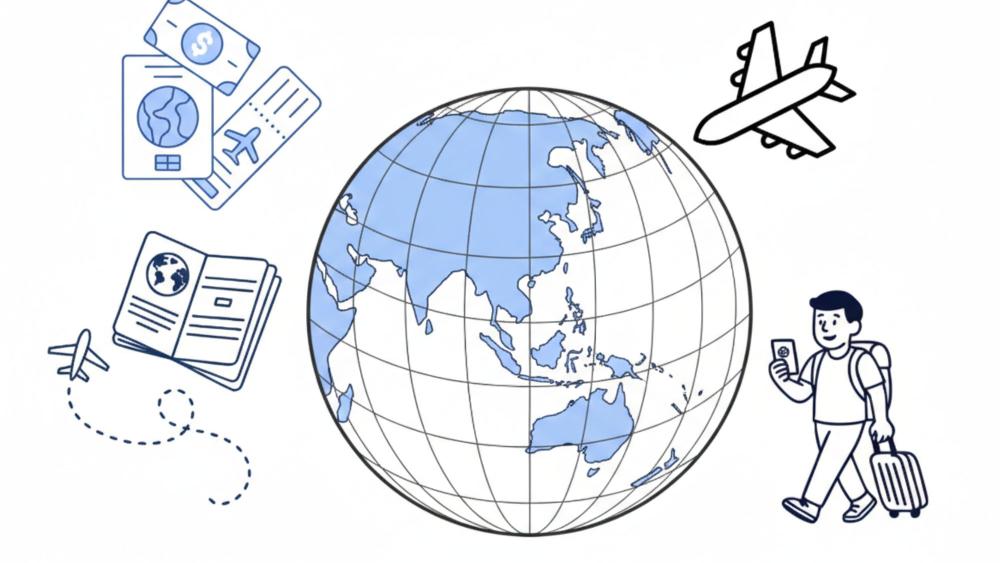
Asia
Navigating the Diverse Landscapes of Asia: A Traveler's Guide
Asia is a complex geographical epic across the Eurasian landmass, where tectonic forces, climate, and dense civilizations intersect. Travelers should develop spatial literacy—the skill to understand how landforms influence societies. From the Himalayas' uplift due to the collision of the Indian and Eurasian Plates to the volcanic arcs of the Sunda Plate, Asia's terrain shapes migration, agriculture, architecture, and spiritual traditions. Grasping this framework turns travel into genuine cultural immersion.
Asia's travel zones are defined by four main subregions. East Asia combines dense coastal corridors with the high Tibetan Plateau. Central Asia, mostly landlocked, served as the Silk Road frontier connecting Eurasian civilizations. West Asia is a desert crossroads linking to the Mediterranean. North Asia, reaching into Siberia, directs polar winds that shaped nomadic migrations and resilient settlements. Each subregion illustrates how geography influences economic routes and cultural exchange.
South Asia, at the center of Asia, formed from Gondwana millions of years ago. The Indian Plate's northward push created the Himalayas and Hindu Kush, shaping a dramatic landscape. Beyond tectonics, the monsoon system drives its seasons: the summer monsoon provides 70–90% of rainfall, while the winter monsoon sustains island nations like Sri Lanka and the Maldives. Home to over two billion people, South Asia is a demographic giant where English serves as an urban lingua franca, yet religious and linguistic identities persist in scripts like Nastaliq and Devanagari. It is the birthplace of Hinduism, Islam, Buddhism, and Sikhism, which deeply influence daily life.
Southeast Asia lies in a dynamic geological corridor where the Pacific Ring of Fire meets the Alpine belt. Mostly on the Sunda Plate, its landscapes are characterized by seismic activity and fertile volcanic soils, especially in Indonesia and the Philippines. The region is geopolitically split between the Indochinese Peninsula and the Malay Archipelago, including mainland countries such as Thailand, Vietnam, Cambodia, Laos, and Myanmar, as well as maritime states such as Singapore, Brunei, and Timor-Leste. This geography has fostered cultural fusion influenced by Indianized kingdoms, Chinese trade, Islamic maritime expansion, and European colonialism, now unified under ASEAN.
Asia’s modern energy is evident in its megacities—urban centers driving global growth. Delhi, Mumbai, Dhaka, Karachi, Jakarta, and Bangkok are economic hubs where infrastructure expands alongside rapid population growth. Mumbai anchors India's financial markets, with institutions such as the National Stock Exchange, while Bangladesh ranks among the fastest-growing middle-income economies. These cities reflect migration trends, innovation clusters, and the evolving center of global commerce.
For travelers, timing and terrain are inseparable. Visiting the Maldives requires understanding the winter monsoon, while trekking in Nepal demands respect for Himalayan altitude and seasonal routes. Indonesia's volcanic landscapes reflect its tectonic setting, not just scenic appeal. Recognizing these factors helps travelers plan strategically, aligning itineraries with climate, transport, and regional festivals shaped by seasonal rhythms.
Mastering spatial literacy elevates exploration beyond sightseeing. Understanding tectonic activity, population density, script traditions, and urban economies reveals Asia as a coherent yet diverse mosaic. Geography becomes narrative, climate sets the rhythm, and culture provides context. Embracing this perspective, travelers do not just traverse Asia—they interpret it.
Comments
Add new comment