


Southeast Asia
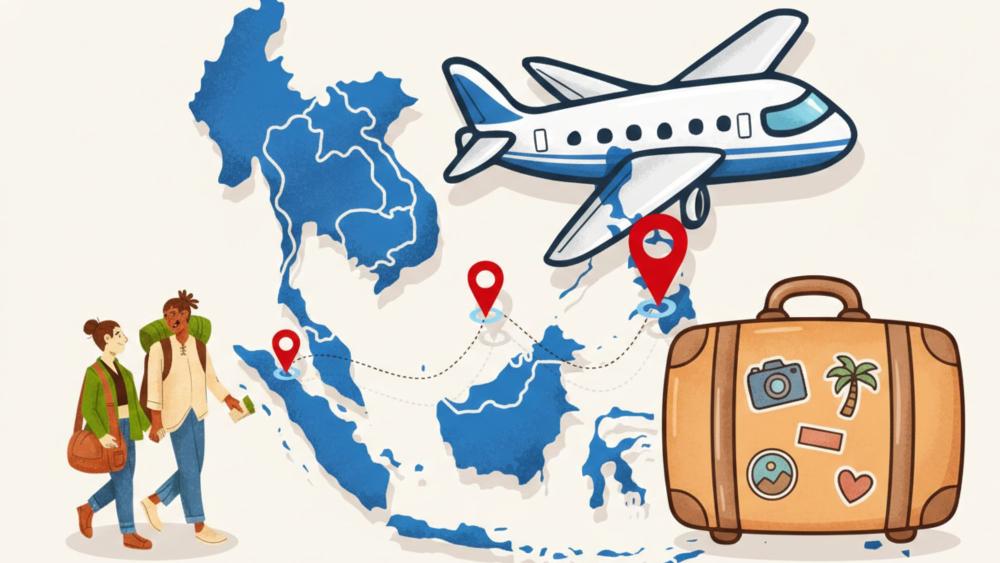
Southeast Asia Should Be on Every Traveler's List
Discovering Southeast Asia: A Traveler's Essential Guide to the Region
Introduction: The Gateway to the East
Located between the great civilizations of China and India, Southeast Asia is a vibrant blend of culture, history, and natural beauty. With over 675 million people—nearly 8.5% of the global population—the region showcases a diversity in which ancient traditions coexist with modern skylines.
Geographically, Southeast Asia lies south of China and east of the Indian subcontinent and is politically unified under the Association of Southeast Asian Nations (ASEAN). Travelers can explore 11 sovereign states, each adding a unique thread to the region once known as the “East Indies.”
Whether seeking sacred temples, tropical islands, bustling megacities, or untouched rainforests, Southeast Asia offers unmatched depth and diversity.
Mainland vs. Maritime: The Two Faces of Southeast Asia
Geographically, the region is divided into two striking subregions: the mountainous Indochinese Peninsula (Mainland Southeast Asia) and the volcanic island chains of the Malay Archipelago (Maritime Southeast Asia).
Mainland Southeast Asia
- Cambodia
- Laos
- Myanmar
- Peninsular Malaysia
- Thailand
- Vietnam
Maritime Southeast Asia
- Brunei
- East Malaysia
- Indonesia
- Philippines
- Singapore
- Timor-Leste
Peninsular Malaysia is physically part of the mainland but culturally and historically linked to the maritime world. It bridges continents and cultures, blending influences from both subregions.
A Tapestry of History: Civilizations That Shaped the Region
Today’s Southeast Asia reflects thousands of years of layered influences.
Prehistoric Foundations
Long before modern borders, the landmass known as Sundaland connected the mainland to many islands. The caves of Sulawesi and Borneo contain figurative paintings over 40,000 years old, among the oldest known on Earth.
The region is also home to Gunung Padang, considered the largest megalithic site in Southeast Asia.
The Hindu and Buddhist Kingdoms
Starting around 400 BCE, “Indianisation” integrated the region into the Indosphere, with Sanskrit and Pali influencing scripts and royal courts.
This era produced monumental wonders such as:
- Angkor Wat
- The maritime empires of Srivijaya and Majapahit
These kingdoms transformed Southeast Asia into a center of art, trade, and religious devotion.
The Islamic Influence
From the 11th Century, Islam spread along trade routes for spices. The Malacca Sultanate became a center of faith and commerce, reshaping the Malay Peninsula and much of the archipelago.
The Colonial Era
From the 16th Century, European powers—Portuguese, Dutch, British, French, Spanish, and American—competed for control.
Notably, Thailand was the only nation never colonized, due to visionary modernization reforms.
Modern Autonomy
After World War II, the region experienced rapid decolonization. Today, Southeast Asia balances economic integration with the preservation of national identity and sovereignty.
Climate and Environment: What Travelers Should Expect
Tropical Monsoon Climate
Southeast Asia features year-round warmth, high humidity, and monsoon-driven wet and dry seasons. Even in heavy rains, landscapes become lush and picturesque—ideal for photography and cultural immersion.
Regional Climate Nuances
- Northern Vietnam experiences subtropical winters with occasional cold waves.
- Central Myanmar's “Dry Zone,” near Bagan, remains semi-arid even during monsoon months.
- Highland regions across the mainland and islands provide cooler escapes.
The Ring of Fire
Indonesia and the Philippines lie along the Pacific Ring of Fire, resulting in dramatic volcanic landscapes such as Mayon Volcano.
Biodiversity Wonders
Crossing the Wallace Line reveals a significant ecological shift between Asian and Australasian species.
Divers flock to the Coral Triangle, the global epicenter of marine biodiversity and a paradise for underwater exploration.
Culture, Religion, and Social Etiquette
The Religious Landscape
Faith is deeply embedded in daily life:
- Islam dominates Indonesia, Malaysia, and Brunei.
- Buddhism shapes the cultures of Thailand, Myanmar, Cambodia, and Laos.
- Christianity prevails in the Philippines and Timor-Leste.
- Folk religions remain influential in Vietnam.
- Hinduism thrives vibrantly in Bali.
Temples, mosques, and churches are not merely tourist attractions but active spiritual centers.
Artistic Heritage
Experience Wayang Kulit, where epic tales like the Ramayana unfold through shadow and light.
Enjoy the resonant sounds of Gamelan and the melodic rhythms of Angklung orchestras—art forms closely linked to ritual and community.
Cultural Etiquette Tips
- In many Indosphere-influenced cultures, eating with the right hand is customary.
- In Vietnam and Sinic-influenced areas, chopsticks are the primary utensils.
- Always remove footwear and dress modestly in sacred spaces.
Respect for elders, hierarchy, and community harmony remains central across societies.
The Traveler's Economy: Budget to Luxury
Southeast Asia offers one of the most diverse ranges of travel costs worldwide.
Economic Powerhouses
- Indonesia is the region's largest economy and a member of the G-20.
- Singapore leads in GDP per capita and urban efficiency.
Cost Spectrum
From budget-friendly Hanoi streets to Singapore's luxury skyline, travelers can tailor experiences to nearly any budget.
Trade and Infrastructure
The Port of Singapore stands as the world's busiest transshipment hub, reflecting the region's importance in global commerce.
Countries like Cambodia increasingly depend on tourism for economic growth and heritage conservation.
Major Urban Centers: Modern Energy and Environmental Challenges
The region's dynamic cities include:
- Jakarta
- Bangkok
- Ho Chi Minh City
- Manila
- Kuala Lumpur
These metropolitan hubs drive modernization, innovation, and global connectivity.
Rapid Development presents environmental challenges. For example, Jakarta faces significant coastal subsidence, prompting Indonesia to relocate its capital to Nusantara.
Preserving the Heritage: Responsible Travel in Southeast Asia
Southeast Asia's rainforests, second only to the Amazon in size, are biodiversity strongholds. However, deforestation threatens iconic species such as the orangutan and the Sumatran tiger.
Regional cooperation through ASEAN environmental agreements aims to address issues such as transboundary haze caused by agricultural burning.
Travelers play a vital role in preservation:
- Support eco-conscious accommodations.
- Respect wildlife and marine ecosystems.
- Engage with local communities responsibly.
- Choose cultural experiences that sustain heritage traditions.
Why Southeast Asia Should Be on Every Traveler's List
Few regions balance the ancient and futuristic so seamlessly. From prehistoric cave art to gleaming skyscrapers, and from sacred rituals to cutting-edge economies, Southeast Asia offers one of the most layered travel experiences on Earth.
By traveling thoughtfully and responsibly, we not only explore its wonders but also help protect them for future generations.
Comments
Add new comment