Monas Central Jakarta
Monas: a guide to Jakarta's National Monument - its history, the lingga-yoni philosophy, the golden flame, the museum inside, and visiting tips.
On this page
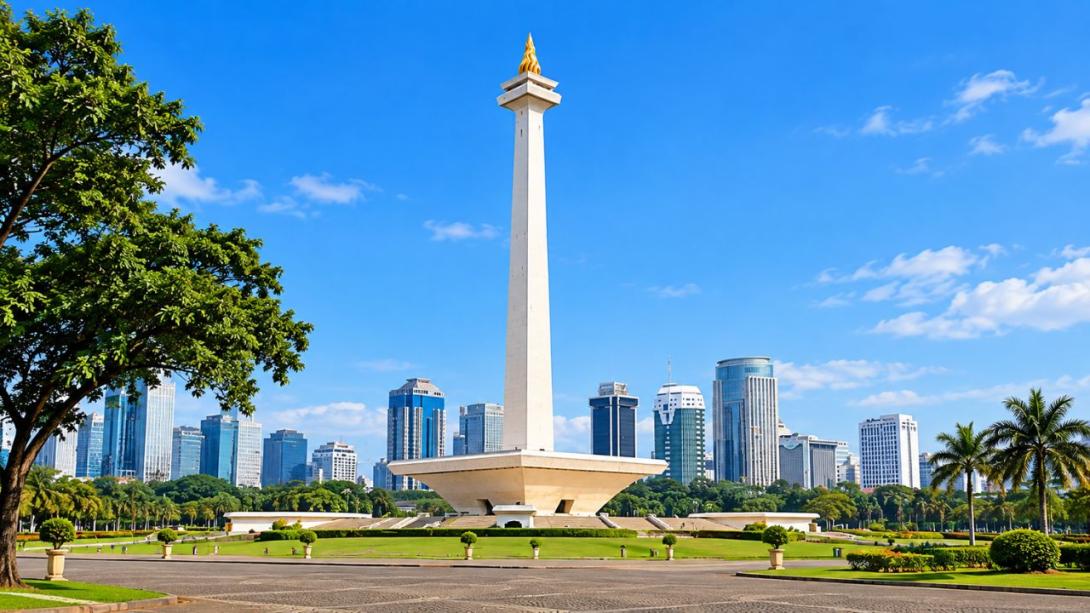
If we talk about Jakarta, one of the most familiar places is certainly the National Monument, or what we usually call Monas. It stands right in the middle of Merdeka Square in Central Jakarta and has become one of the best-known landmarks in Indonesia.
Monas is about 132 metres tall. It is not just a Jakarta tourist icon; it is a monument built to remember the Indonesian people's struggle against colonisation and their fight for independence.
The History of Monas
If we look at its history, the building of Monas began with an idea from Indonesia's first president, Soekarno. He wanted a national monument that could become a symbol of the nation's struggle and independence.
Monas was designed by two Indonesian architects, Frederich Silaban and R.M. Soedarsono. Construction started on 17 August 1961, to mark the 16th anniversary of Indonesian Independence.
The work took place in several stages and spanned the terms of two presidents. Monas finally opened to the public on 12 July 1975, under President Soeharto.
The Philosophy Behind Its Shape
There is something interesting about the shape of Monas that many people may not know. Its design is inspired by the lingga and yoni concept in Hindu culture, which is linked to symbols of fertility.
The soaring tower represents the lingga, or pestle, while the cup below it represents the yoni, or mortar. The two forms are combined into a single piece of architecture.
Some of its measurements also connect to the Proclamation of Independence on 17 August 1945 - the cup terrace is 17 metres high and measures 45 x 45 metres.
The Golden Flame at the Top
One of the most recognisable parts of Monas is the golden flame at its peak. The flame-shaped structure is made of bronze and covered in gold.
The flame is about 14 metres tall. Its gold layer weighed around 35 kilograms when it was built, and was later increased to about 50 kilograms.
The flame is not just decoration. It symbolises the Indonesian nation's spirit of struggle, which keeps burning and never goes out.
What Is Inside Monas?
It turns out Monas is not only enjoyed from the outside. Inside the building there are several parts visitors can explore to learn about Indonesian history.
At the base of Monas is the National History Museum. It holds 51 dioramas depicting events from the Indonesian archipelago's history, from prehistoric times to modern Indonesia.
Then there is the Freedom Room inside the cup of Monas. It contains a number of state symbols, including the Garuda Pancasila emblem, a map of Indonesia, and a recording of President Soekarno reading the Proclamation of Independence.
Another highlight is the observation deck at the top. It sits about 115 metres up and can be reached by lift. From up there we can take in views of Jakarta in every direction, looking out over the government district, high-rise buildings and the city's growth.
Monas as a Jakarta Attraction
Today Monas is an important historical attraction in Jakarta. It sits in the Merdeka Square area, close to government buildings and other historic sites. Besides the museum and the observation deck, visitors can also enjoy the park and open spaces around the monument.
For me, Monas is interesting to write about because it holds so much information about Indonesian history - from the idea behind it in President Soekarno's time, to its architectural philosophy, to the historical collections inside.
So when we see Monas standing in the middle of Jakarta, we are really looking at a symbol of Indonesia's struggle for independence that has been an important part of the capital's identity for decades. If you want to explore the area around it, read our Central Jakarta guide, and see the official Jakarta provincial government website.