


General Information: Indonesian Rupiah (IDR)
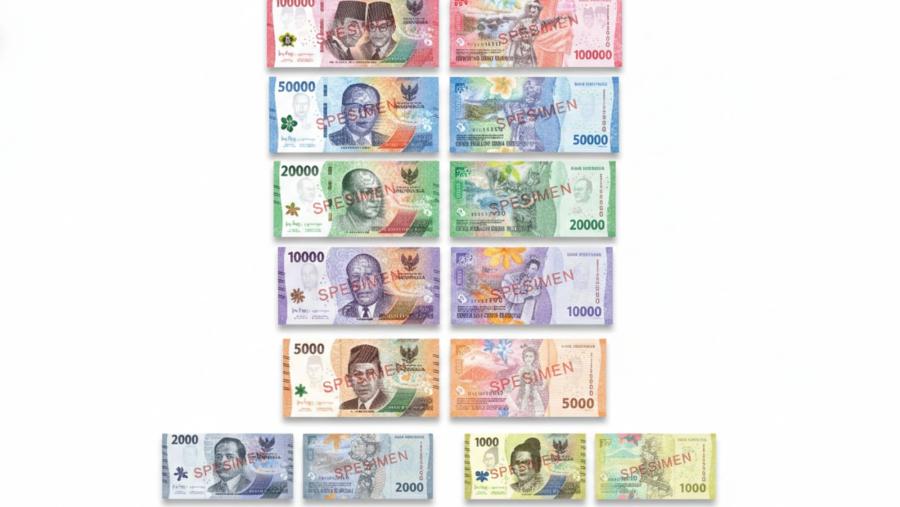
National Hero Series Rupiah Currency, Issue Year (TE) 2022, issued by Bank Indonesia.
Mastering the Millions: A Practical Guide to Indonesian Currency (IDR)
For many travelers, the first Indonesian ATM withdrawal is a surprising introduction to "Millionaire" status. Receiving a thick stack of banknotes with many zeros is a common rite of passage.
As a travel finance specialist, I assure you that navigating this currency is straightforward once you look beyond the digits.
The official currency of the Republic of Indonesia is the Rupiah, designated by the ISO code IDR and symbol Rp. The name carries deep historical weight, derived from the Sanskrit word rupyak (rūpya), meaning "silver." This etymology reflects the archipelago's ancient trade heritage.
While Indonesia is rapidly modernizing, cash remains the primary payment method—especially outside Bali and Jakarta's high-end areas, where traditional markets and roadside eateries thrive.
Visual Guide to Banknotes and Coins
Indonesia's current "National Heroes" banknotes are vibrant and distinctive. However, the government plans a long-discussed "Redenominasi" to simplify the currency by removing three zeros (turning 1,000 into 1).
Until that reform is implemented, you'll be managing the "millions."
Indonesian Banknotes Reference
Here's how to quickly identify each denomination:
Rp100,000
Primary Color: Red / Pink
Floral Feature: Bunga Anggrek Bulan (Moon Orchid)
Blind Code: 1 pair
Rp50,000
Primary Color: Blue
Floral Feature: Bunga Jepun Bali (Frangipani)
Blind Code: 2 pairs
Rp20,000
Primary Color: Green
Floral Feature: Bunga Anggrek Hitam (Black Orchid)
Blind Code: 3 pairs
Rp10,000
Primary Color: Purple
Floral Feature: Bunga Cempaka Hutan Kasar
Blind Code: 4 pairs
Rp5,000
Primary Color: Brown / Tan
Floral Feature: Bunga Sedap Malam (Tuberose)
Blind Code: 5 pairs
Rp2,000
Primary Color: Gray
Floral Feature: Bunga Jeumpa
Blind Code: 6 pairs
Rp1,000
Primary Color: Yellow / Gray
Floral Feature: Bunga Anggrek Larat
Blind Code: 7 pairs
You may occasionally see the Rp75,000 commemorative note. It is legal tender, red and white, with 4 pairs of blind codes.
Coins and Small Change
Coins circulate in Rp100, Rp200, Rp500, and Rp1,000 denominations. The Rp50 unit exists only in accounting and is rarely used physically.
Coins are primarily useful for:
- Exact change at minimarkets
- Parking attendant tips
- Small rounding adjustments
Understanding the "K" Notation
To reduce digit fatigue, menus and shop displays often use "K" to denote thousands.
If a meal is priced at 150K, the total is Rp150,000.
This shorthand helps you quickly understand local prices, especially when scanning café menus or market boards.
Cash vs. Card: Navigating Payments by Location
Effective money management in Indonesia requires a strategy tailored to your itinerary.
Major Hubs (Hotels, Malls, High-End Dining)
In major cities like Jakarta and resort zones in Bali, Visa and Mastercard are widely accepted. Digital and card payments are generally preferred for security.
Local Culture (Warungs, Traditional Markets, Small Transport)
Cash is essential.
Street food vendors (warungs), local transport operators, and traditional markets rarely accept cards. Always carry a mix of 5k, 10k, and 20k notes.
Digital Innovation: QRIS
You will see QRIS (Quick Response Code Indonesian Standard) everywhere. This is Indonesia's national QR payment system.
However, it usually requires local e-wallet apps like GoPay or OVO, which can be difficult for short-term visitors to link to foreign bank accounts.
Strategic Money Management: ATMs and Currency Exchange
Safe Withdrawal Guide
Use ATMs inside bank branches for maximum security.
Limits and Denominations
ATMs typically dispense either Rp50,000 or Rp100,000 notes.
Transaction limits typically cap at Rp1,250,000 or Rp2,500,000 per withdrawal.
The "Break" Strategy
Large notes can be difficult to use in rural areas.
Before visiting rural areas, "break" your 100k notes at minimarkets like Indomaret or Alfamart by purchasing a small item to get smaller denominations such as 5k and 10k notes.
Reputable Money Changers and the "Pristine Bill" Rule
Use only authorized money changers with physical storefronts, such as BMC or Central Kuta. Avoid unauthorized street booths regardless of their rates.
If exchanging foreign cash (especially USD), follow the "Pristine Bill" rule:
Indonesian banks enforce strict quality standards. Bills with creases, ink marks, or tears may be rejected. Ensure your foreign currency is crisp and clean before departure.
Protecting Your Purse: Security and Local Customs
The "3D" Authenticity Method
Bank Indonesia recommends the "3D" method to verify genuine notes:
Dilihat (Look) – Check for the watermark and embedded security thread.
Diraba (Touch) – Feel for raised texture on the blind code lines and portraits.
Diterawang (See-through) – Hold the note to the light to see the recto, where overlapping images form a complete logo.
The "Zero" Scam Warning
Be particularly alert with the Rp10,000 (Purple) and Rp100,000 (Red/Pink) notes.
In low light at evening markets or warungs, these notes can look similar. Scammers may try to confuse you. Always:
- Count the zeros
- Confirm the color
- Double-check before handing over cash.
Local Customs and Economic Context
Tipping is not mandatory but appreciated. A common practice is rounding taxi or ride-share fares to the nearest 5k or 10k.
To maintain a value perspective:
As of 2026, 1 USD ≈ is Rp16,845. At this rate, a 50K note equals roughly $3, the price of a solid local meal.
This high-digit environment partly reflects historical volatility. During the 1998 Asian Financial Crisis, the Rupiah's value fell by nearly 600%. That period reshaped monetary policy and explains Indonesia's strong stance on financial stability today.
Conclusion: Travel with Confidence
Mastering the Rupiah (IDR) requires a blend of security-conscious habits and local savvy.
Maintain small denominations.
Use bank-secured ATMs.
Double-check your zeros.
The Rupiah is far more than paper and ink — it is a symbol of Indonesian sovereignty and unity.
Treat it with respect.
Use it to support local businesses.
And enjoy your journey through the vibrant "Millions" of Indonesia.
Comments
Add new comment