Story of Monas History
Monas history told as a walking journey through Indonesia's National Monument in Central Jakarta, from Soekarno's idea to the golden flame and museum.
On this page
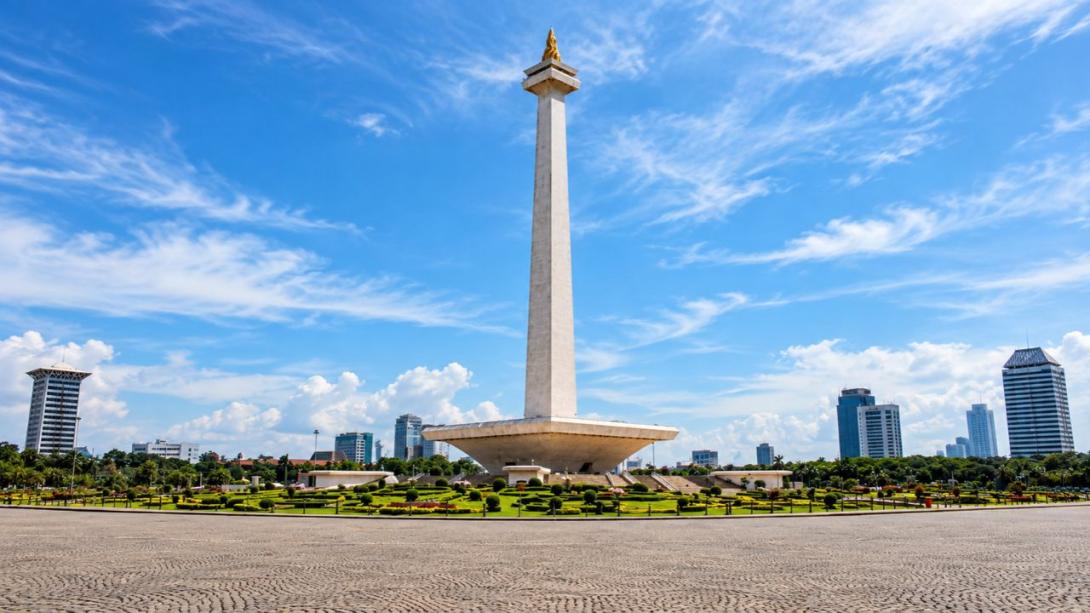
Hello, this time I am standing in the National Monument area - what we usually call Monas - in Merdeka Square, Central Jakarta. From here I can see a tall tower with a golden flame on top. To me, Monas history is not just a record of a building; it is the story of a nation that wanted to remember its struggle.
Monas is more than an icon of Jakarta. It was built to honour the Indonesian people's fight for independence, and almost every part of it holds a meaning we can read.
The Early Idea Behind Monas History
While enjoying this area, I want to tell you a little about how it was built. The idea that started Monas history came up during the presidency of Soekarno, around 1954. Bung Karno wanted Indonesia to have a monument that could remind the next generation of the struggle against colonisation, especially Dutch rule.
To decide its shape, the government held a design competition, and the selection went through several stages. Two names that later mattered a great deal were the architects Frederich Silaban and R.M. Soedarsono. President Soekarno himself gave direction on the concept that was finally built.
The First Stone on 17 August 1961
Construction began on 17 August 1961, exactly as Indonesia marked the 16th anniversary of its independence. The date for laying the first stone was chosen to fall on a moment that matters deeply to this nation.
But the process did not run smoothly. Monas took years to build and faced obstacles, including the political and government changes of the late 1960s. After many stages, Monas finally opened to the public on 12 July 1975, under President Soeharto.
The Meaning Behind Its Shape
Now let us look at the shape of the building. Monas stands about 132 metres tall, and its design is closely tied to Indonesian culture. The soaring tower is often described as a pestle, while the cup below it represents a mortar. The pestle and mortar are traditional tools for pounding rice, familiar in agrarian life. The form is also linked to the lingga and yoni concept, symbolising fertility and balance.
Numbers of independence were woven into the design as well. The figures 17, 8 and 45 recall the proclamation date, 17 August 1945. One example is the cup terrace, which measures 45 by 45 metres, while several accounts link the cup's height of about 17 metres to that same date.
The Golden Flame at the Top
The most recognisable part is the gold-covered flame at the peak of Monas. It symbolises the Indonesian nation's spirit of struggle, which keeps burning. The flame is about 14 metres tall. At first, the gold layer weighed around 35 kilograms, and one figure known for donating gold was Teuku Markam, a businessman from Aceh.
Then in 1995, when Indonesia marked 50 years of independence, more gold was added to the flame, bringing the total to about 50 kilograms. So the gold we see today has a story of its own in the journey of this monument.
The National History Museum and Freedom Room
Monas also has several rooms we can visit, not just the park outside. At its base is the National History Museum, which displays 51 dioramas covering periods of Indonesian history, from the era of the archipelago's kingdoms, through the struggle against colonial rule, to Indonesia after independence.
In another part is the Freedom Room, which keeps national symbols including the Garuda Pancasila emblem and a map of the Indonesian archipelago. One interesting feature is a special door linked to the presentation of the proclamation text and a recording of Bung Karno reading the proclamation of independence.
If we take the lift up to the observation deck, we can see Jakarta from about 115 metres up. From there the city opens out far more widely: the Merdeka Square area and the buildings around it. Binoculars are also available to help visitors see objects further away.
Tracing Monas History Today
Now that I know the story, I understand better why Monas was built in the centre of Jakarta and why it became one of the country's best-known national symbols. Monas is not only a tourist site or a place to enjoy the city view; it also reminds us of the struggle for independence, the grand idea of President Soekarno's time, and the construction that continued into President Soeharto's era.
Today the Monas area is a destination for history and education, managed by the Jakarta provincial government. Many people come to walk, take photos, visit the museum, or go up to the observation deck. If you want to explore the surrounding area, read our Central Jakarta guide and the National Monument page, or see the official Jakarta provincial government website.
Sources and Further Reading
To enrich this Monas history story, I also referred to a few readings: Wikipedia: Monumen Nasional, Bapenda Jakarta, Taman Kebangsaan, University of Jember, and LBI FIB, University of Indonesia.