


Geography & Borders: Thailand’s Position in Southeast Asia and Its Neighbors
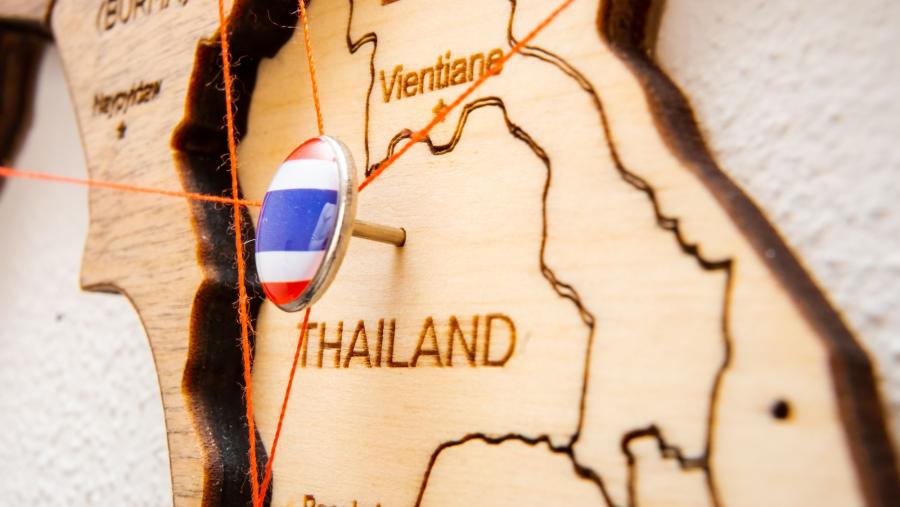
Illustration of a map / map of Thailand and its borders
The Heart of the Peninsula: A Guide to Thailand’s Geography and Borders
1. Introduction: Thailand’s Strategic Place in the Sun
Think of Thailand as Southeast Asia’s crossroads. It sits right in the middle of the Indochina Peninsula, stretching south into the Malay Peninsula. For anyone in the travel industry, this location is gold. Thailand isn’t just a country—it’s the land bridge that links all corners of mainland Southeast Asia. The geography is a patchwork of dramatic northern mountains, the high plateaus up in the northeast, lush river valleys, and some of the most beautiful beaches anywhere. This mix, along with its central spot on the map, has turned Thailand into a hub for travelers and the beating heart of the region.
2. The Geographic Coordinates: Where Exactly is Thailand?
So, where do you find Thailand? It sits between 5° and 21° North latitude, and 97° to 106° East longitude. The country covers 513,115 square kilometers, making it the third largest in Southeast Asia. Some places rank it 51st in the world, but Thailand’s own numbers put it at 50th. Either way, it’s a big chunk of land, right between the huge markets of South and East Asia. This spot makes Thailand a key gateway for trade and travel across the whole continent.
3. The Four Neighbors: Exploring Thailand’s Land Borders
Thailand shares 5,673 kilometers of land borders with four neighbors, and each border brings its own flavor.
- Myanmar (West & Northwest): Here, the border cuts through rugged mountain ranges. What used to be a battleground is now a paradise for trekkers and anyone looking for those epic highland views.
- Laos (North & Northeast): The Mekong River marks most of this border. It’s not just a line on a map—it’s the center of life for the Isan region, shaping both scenery and culture.
- Cambodia (East & Southeast): The land here is mostly plains and lowlands, but the real story is history. This border region was once the stage for the fall of the Khmer Empire and the rise of Ayutthaya. You see the legacy everywhere, from ancient ruins to the architecture that draws crowds every year.
- Malaysia (South): Down south, the border runs through the Kra Isthmus, the skinniest part of the peninsula. It’s a green, tropical corridor that links Thailand to Malaysia and, ultimately, Singapore—a key path for overland travelers.
4. A Tale of Two Seas: Thailand’s Extensive Coastlines
Thailand isn’t just about land. It’s lucky enough to have two very different coasts, which is a huge reason why its beaches are famous worldwide.
- Andaman Sea (West Coast): This coast faces the Indian Ocean and is dotted with those eye-catching limestone islands like the Phi Phi Islands. The water glows emerald green, and the scenery is straight out of a postcard.
- Gulf of Thailand (East Coast): On the other side, the Gulf of Thailand opens into the South China Sea. The water’s calmer and shallower, making this stretch perfect for resorts and shipping routes.
Quick facts: Thailand’s got 3,148 kilometers of coastline and oversees a maritime zone covering 323,488 square kilometers, as set out by the 1982 UN Convention on the Law of the Sea. It’s not just about the scenery, either—Thailand’s home to 110 national parks, protecting both land and sea, and all the life that comes with them.
5. Regional Breakdown: The Five Geographic Zones
Geographers split Thailand into five main zones, and each one has its own vibe—almost like a different world for travelers.
Northern Mountains
Think dramatic peaks and cool mountain air, a real switch from the steamy lowlands. Doi Inthanon towers over everything else at 2,565 meters, and the whole region feels a little more relaxed thanks to the lower temperatures.
Northeastern Plateau (Isan)
It’s mostly dry, with the Khorat Plateau at its heart, but the Mekong River changes everything. That river is life here—it keeps the farms going and shapes the culture all along its banks.
Central Plains
People call this the “Rice Bowl” of Thailand for a reason. The ground is rich and perfect for growing just about anything, thanks to the Chao Phraya River system. Everything converges at Pak Nam Pho in Nakhon Sawan, where the Ping and Nan Rivers meet up and kick off the journey south.
Southern Peninsula
This is different again—a slim stretch of land reaching down into Malaysia. Here you find the Kra Isthmus, the narrowest spot, and Lake Songkhla, the country’s biggest lake. The coastline flips between rugged cliffs and endless beaches.
Western Highlands
These are wild and rugged, full of deep valleys and limestone mountains stretching down from the North. They’re important, too, because they collect the rainwater that feeds the rest of the country.
6. Climate and Seasonality: The Traveler’s Perspective
Thailand sits in the “Tropical Savanna” climate zone, and the weather swings between two monsoon systems. The country gets hot—temperatures run from 18°C up to a sweaty 34°C, and in the hottest months, the heat can feel relentless. Rainfall averages somewhere between 1,200 and 1,600 mm a year, but some places—like Ranong and Trat—get absolutely soaked, up to 4,500 mm.
Here’s how the seasons break down:
- Rainy Season (mid-May to mid-October): The Southwest Monsoon brings heavy rains and lush, green scenery. It’s wet, no question.
- Winter (mid-October to mid-February): The Northeast Monsoon cools things down and dries out the air. This is when most people want to visit—clear skies and gentle breezes.
- Summer (mid-February to mid-May): This is the hottest stretch. Inland areas can hit 40°C, so come prepared.
One thing to remember: the South has its own rhythm. The monsoon timings flip depending on which coast you’re on. Over on the Andaman side, rain peaks in September. On the Gulf coast, it pours between November and January.
7. Conclusion: Why Geography is Thailand’s Greatest Asset
Thailand’s spot right in the middle of Southeast Asia is its secret weapon. You can start your day in the misty northern mountains, move through the Central Plains where rice grows everywhere, and end up on a white-sand southern beach. There are 110 national parks and almost 40 million people spread across every kind of landscape you can imagine. That mix keeps Thailand exciting and full of surprises.
Traveler’s Tip: Plan your trip with the weather in mind. If you’re heading out in November, stick with the Andaman coast—you’ll dodge the Gulf’s rainy season. And don’t just hang around Bangkok. The real Thailand is out in the countryside, from the fertile plains to the old Khmer borderlands in the East. There’s a lot more to see once you get out there.
Comments
Add new comment