


Religion & Spirituality: The role of Theravada Buddhism in daily life
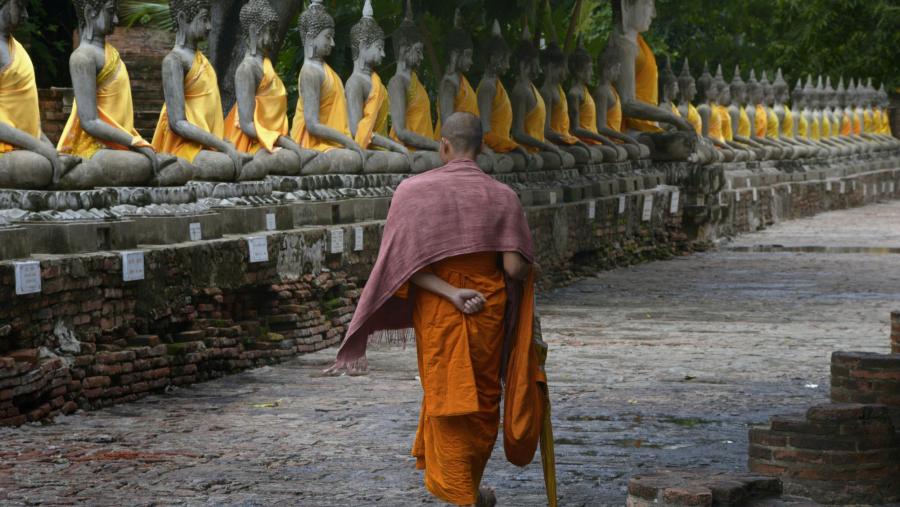
Monk walking around the statues of Buddha in Wat Yai Chaimongkol temple in Ayutthaya, Thailand
Thailand’s Spiritual Roots
Thailand’s spiritual roots run deep, shaping just about every part of its national identity. Most people—about 95%—follow Theravada Buddhism. But it’s not just a religion here. Buddhism really lives in the culture. You see it in everything from royal ceremonies to the quiet routines at the local temple, or wat. It influences how people see right and wrong, what their buildings look like, even how the laws get written. Buddhism is really at the heart of what makes Thailand feel different from its neighbors.
Tam Bun: Making Merit
One idea that pops up everywhere is “Tam Bun” (ทำบุญ), or making merit. Basically, people believe that doing good things builds up virtue, or bun. This isn’t just about feeling good now. People see it as a way to bring blessings and happiness in this life, and even set themselves up for something better in the next one, thanks to karma.
So, Tam Bun isn’t just a religious thing. It drives generosity, helps people stick together, and shapes personal ethics all across Thai society.
Common Ways to Make Merit
- Donating to monks
- Supporting temples
- Helping someone out
- Releasing birds
Buddhism in Thailand
Buddhism in Thailand isn’t just something people practice at temples—it’s woven into everyday life. Take Tak Bat, for example.
Daily Practice: Tak Bat
- Every morning, folks head out to give food to monks.
- It’s not just about charity. There’s something deeper going on: a real spiritual exchange between the community and the monks.
- By offering alms, people build up merit and help monks dedicate themselves to spiritual practice.
- It’s a give-and-take that keeps everyone connected and reinforces a sense of belonging.
Blending with Older Beliefs
But that’s not all. Buddhism in Thailand blends with older beliefs too.
- You’ll spot spirit houses—San Phra Phum—everywhere, from tiny homes to high-rise buildings.
- These shrines honor the guardian spirits of the land.
- People leave offerings to keep the peace and ask for protection.
It’s a mix of animism and Buddhist tradition, showing how respect for nature spirits fits right alongside the Buddha’s teachings.
Talismans and Luck
Then there’s the whole world of talismans and luck.
- Amulets and sacred tattoos—Sak Yant—are everywhere.
- People believe they bring protection, strength, and good luck.
Sure, Theravada Buddhism teaches that your actions (karma) matter most, but let’s be honest—lots of folks still reach for a little extra help from the spiritual world. It’s about wanting safety and hope in a life that’s often unpredictable.
Wat (Temples) in Thailand as Community Centers
In Thailand, a wat isn’t just a place for prayer—it’s really the core of community life. People come here for all sorts of reasons.
- Sure, there’s worship, but temples double as schools, teaching everything from Buddhist philosophy to basic reading and writing.
- When it’s time for big festivals like Songkran or Loy Krathong, everyone shows up. The wat becomes the backdrop for celebrations, ceremonies, and good food.
- It’s also where people meet up, talk, and join in on group activities.
Temples help out in other ways, too. They often offer counseling, hand out social support, and sometimes even run small health clinics. So, a wat isn’t just about religion—it’s about bringing people together and strengthening the bonds that make up the local culture.
Architectural Symbolism in Wat
Thai temple architecture is packed with meaning. Every piece tells a story about Buddhist beliefs.
The Chedi
Take the chedi, for example. It’s that tall, bell-shaped tower you’ll spot right away. The chedi usually holds sacred relics or the ashes of revered people. Its shape points upward, symbolizing the journey to enlightenment. It’s hard to miss—it often stands at the center of the whole temple complex.
The Bot (Ordination Hall)
Then there’s the bot, or ordination hall. This is the most sacred spot in any wat, marked off by special sema stones. Important rituals happen here—especially when new monks are ordained. Only monks can enter certain parts of the bot, so it’s got a real sense of mystery and respect around it.
The Viharn (Assembly Hall)
The viharn, or assembly hall, is a bit more open. This is where laypeople gather to pray, listen to sermons, or take part in community events. It’s the social hub of the temple, and you’ll find all kinds of people there.
Other Structures
You’ll also see prang, those Khmer-style towers, and mondop, pavilions meant for keeping sacred scriptures safe.
Each part of the temple grounds is loaded with symbolism—everything from Buddhist cosmology to the path toward spiritual awakening. The way a wat is laid out usually reflects the Buddhist universe itself, guiding visitors from everyday life to something deeper and more spiritual.
Tourist Etiquette at Sacred Places in Thailand
If you’re heading to a sacred spot in Thailand, like a Buddhist temple (a wat), you’ve got to know the ground rules. These places aren’t just tourist attractions—they’re spiritual havens. The way you behave matters, both out of respect for the people there and to keep the place special for everyone.
Dress Code
First off, dress the part.
- Show up in clothes that cover your shoulders and knees—doesn’t matter if you’re a man or a woman.
- Leave the tight, see-through, or revealing outfits behind.
- If you show up underdressed, lots of temples have sarongs or shawls you can borrow, but honestly, it’s better to just come prepared.
Everyone’s expected to follow this, no exceptions.
Head and Feet
Here’s something most tourists don’t know: in Thai culture, the head is sacred, and the feet are, well, the opposite.
- Never touch someone’s head, even playfully with kids. It’s a big deal, seen as disrespectful.
- On the flip side, don’t point your feet at people, Buddha statues, or monks.
- When you sit, keep your feet tucked away—soles down or pointing behind you.
It’s a small thing, but people notice.
Dealing with Monks
Talking to monks? There are special rules.
- Women, especially, need to be extra mindful—never touch a monk or hand him something directly.
- If you want to give an offering, set it down in front of him or on a cloth so he can pick it up himself. This helps monks keep their vows.
And when you greet a monk (or a Buddha statue), use the wai: press your palms together like you’re praying and raise your hands higher, near your forehead, with a little bow. Monks won’t return the wai the same way, but they might bless you instead.
Conclusion
Stick to these basics and you’ll fit right in. Not only do you honor Thai culture, you make your own visit richer and more memorable. It’s really about showing respect and soaking up the experience.
Thailand's Spiritual Side
Thailand isn’t just about stunning beaches or spicy food—there’s something deeper going on here. If you’re looking for a spiritual kick, you’ll find it, whether you’re chatting with monks or diving into meditation retreats.
Monk Chat: A Unique Cultural Exchange
Take Monk Chat, for example. You’ll find it in places like Chiang Mai. It’s exactly what it sounds like: you sit down with real Buddhist monks and just talk. No script, no pressure.
- People swap stories about life, culture, and what it all means.
- There’s something pretty special about those conversations.
- They break down walls and make you see Thailand through different eyes.
Deepening Practice with Vipassana Meditation
If you’re after more than just a chat, check out one of the Vipassana meditation centers.
- Vipassana means “seeing things as they are”—it’s a meditation style that pulls you into the present moment, tuning you into your body and mind.
- Lots of centers offer short courses, perfect for beginners.
Picture a quiet place where you follow a simple routine:
- Silence
- Daily schedules
- Gentle guidance from teachers who know their stuff
Sure, it’s a challenge, but it strips away stress and gives you a new kind of clarity. It’s the sort of experience that sticks with you, long after you’ve left Thailand.
Comments
Add new comment