


Government & Monarchy: Respecting the Royal Family and local laws
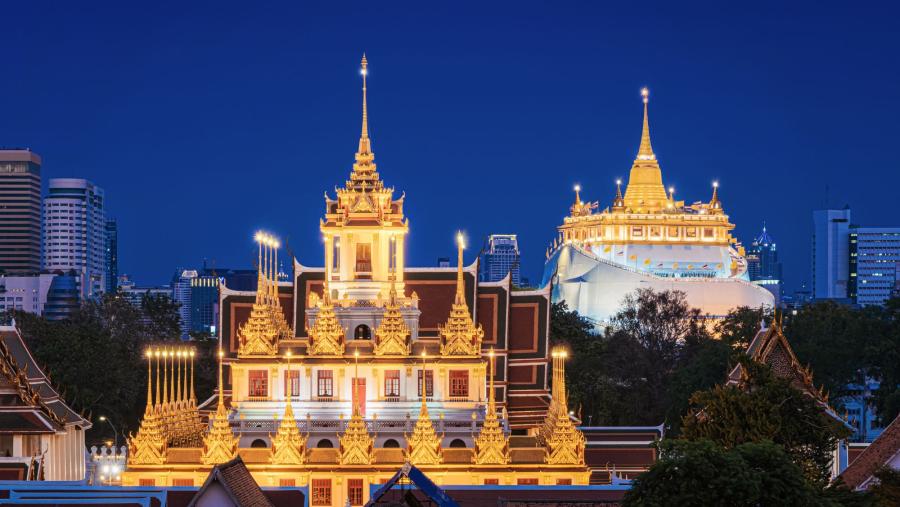
Loha Prasat Wat Ratchanatda and Golden Mountain pagoda
Respecting the Monarchy & Understanding Local Laws in Thailand
Introduction: The Monarchy's Place in Thai Hearts
In Thailand, the monarchy isn’t just about politics or a figurehead on paper. For most Thais, the King stands out as the nation’s father—a symbol that pulls everyone together, no matter what’s happening in the country. He’s more than just a leader. The monarchy sits right at the core of Thai identity, woven into the culture, religion, and history. When things get shaky or uncertain, people look to the royal family to keep things steady. This deep respect runs through every part of society, cutting across ethnic lines and social classes. It’s what helps hold the country together.
You see this respect everywhere. Walk into any government office, school, or even small businesses, and you’ll spot photos of the King and the royal family displayed with real care.
- Twice a day, at eight in the morning and six in the evening, public spaces come to a pause as the national and royal anthems play.
- People stop what they’re doing, stand still, and show their respect—whether they’re at a train station, in a market, or watching TV.
These aren’t just empty rituals. They’re everyday reminders of how deeply this reverence is built into Thai life. It’s part of the routine, something people just do without thinking, because it’s that important.
Lèse-Majesté Law (Article 112 of the Thai Criminal Code)
Definition of the Law
Thailand's lèse-majesté law, set out in Article 112 of the Criminal Code, is about as strict as it gets.
- The law bans any insult, defamation, threat, or contempt aimed at the King, Queen, Crown Prince, or Regent.
- And "insult" doesn't just mean outright attacks — courts often interpret it pretty broadly. Even criticism, commentary, or anything seen as damaging to the monarchy's dignity can land you in trouble.
- This protection covers pretty much every form of expression: spoken words, writing, publications, art, you name it.
- There aren't any loopholes or exceptions here.
Legal Consequences
Breaking Article 112 comes with harsh penalties.
- If you're found guilty, you face three to fifteen years in prison for each offense.
- And they don't just lump everything together — each separate act (like every social media post) can count as its own violation, so sentences can really add up.
- The law doesn't just apply to Thai citizens, either. Anyone in Thailand, including foreigners, falls under its reach.
- Thai authorities aren't shy about investigating and prosecuting anyone who breaks this law within the country.
Digital Ethics
Online, the lèse-majesté law is just as strict.
- It's not only illegal to create or share content the government considers insulting to the monarchy — just liking, saving, or commenting on something sensitive can get you in trouble.
- Authorities can trace your digital activity, and that counts as a legal violation.
- So, whether you live in Thailand or you're just visiting, you have to be extremely careful with anything related to the royal family on the internet.
- This caution isn't just for public posts; even private messages on apps can be monitored and reported.
- In Thailand, when it comes to the monarchy, nothing online is truly private.
Practical Etiquette Regarding the Thai Royal Family
Respect for Thailand’s royal family shows up in all kinds of daily habits. Take Thai money, for example. Since bills and coins have the King’s image or royal symbols, people really watch how they handle cash. Dropping money on the ground? Don’t step on it. Folks keep their bills neat—no careless folding, scribbling, or crumpling. This isn’t just a quirky rule; it’s about showing real appreciation for the monarchy.
National and Royal Anthems
Then there’s the national and royal anthems. Whenever the anthem plays, everyone stops and stands. Common places include:
- Movie theaters
- Train stations
- Parks
- Official ceremonies
Not standing isn’t just rude; in some cases, it can actually get you in trouble with the law.
Physical Gestures
Physical gestures matter too. If you’re pointing at a picture or statue of the royal family, don’t jab your finger at it. People use an open palm or a softer gesture. It’s all part of kreng jai, that deep sense of respect and consideration. For most Thais, the monarchy isn’t just tradition—it’s a symbol of unity and stability at the heart of their culture.
Local Laws & Public Order Important for Tourists in Thailand
If you’re heading to Thailand, you really need to know the local laws — they’re strict, and getting them wrong can land you in serious trouble.
Vaping
Thailand’s not messing around here: e-cigarettes and vape devices are straight-up illegal.
- If you’re caught with one, using one, or even just bringing one into the country, you could face a huge fine (up to ฿30,000) or even jail time.
Drinking and Smoking
The rules are tight.
- Lots of Thailand’s famous beaches — like Pattaya, Phuket, and Samui — ban smoking completely. Ignore the signs and you risk a fine up to ฿100,000 or a year behind bars.
- Alcohol sales aren’t round-the-clock either. Most shops only sell booze from 11:00 to 14:00 and 17:00 to midnight, but these hours can change depending on where you are.
Drugs
Thailand has a zero-tolerance attitude.
- Hard drugs like heroin, meth, and ecstasy? Just don’t. Penalties are brutal — long prison sentences, sometimes even the death penalty.
- Cannabis is a bit different now: it’s legal for medical and limited recreational use, but there are still a lot of restrictions. You can’t use it in public, and if you’re under 20, it’s off-limits.
Final Advice
Rules change from time to time, so always double-check the latest laws before you go. Knowing and respecting these rules does more than just keep you out of trouble — it makes your trip safer and way more enjoyable.
Additional Tips for Traveling in Thailand
A few more things to keep in mind when you’re traveling in Thailand:
- It’s not just about being polite or steering clear of touchy political talk in public.
- There’s this idea called “Mai Pen Rai”—it’s all about:
- Letting things go.
- Not sweating the small stuff.
- Staying open-minded when something feels unfamiliar or things don’t go as planned.
- Still, don’t take that as a free pass to break the rules. Always follow local laws—think:
- Traffic rules.
- Smoking restrictions.
- Anything related to the royal family.
If you mix a little politeness, avoid hot topics, stay flexible, and respect the rules, you’ll have a way smoother and more rewarding experience. Travel smart and show some respect along the way. Have a great trip!
Comments
Add new comment